The Farmhouse Inheritance: Stay One Night or Lose Everything
June 14, 2026
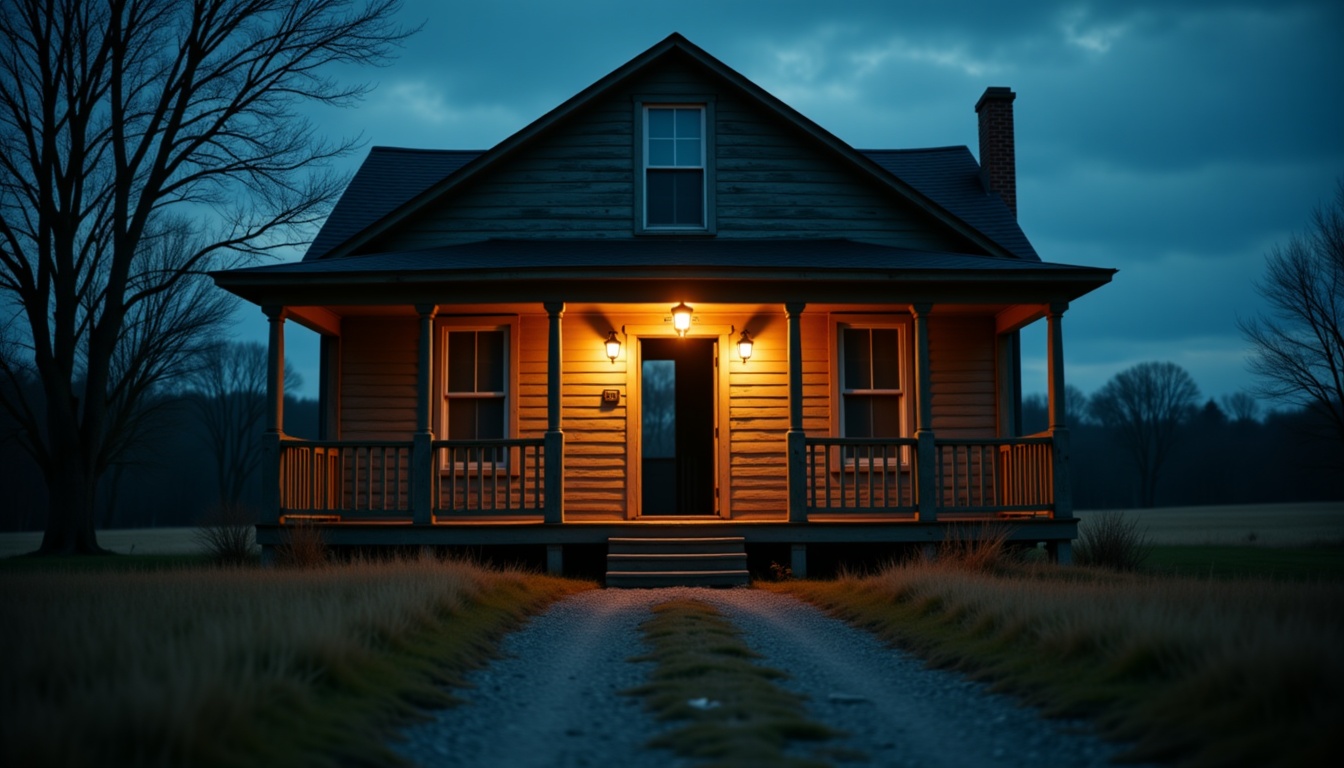
The letter arrived on a Tuesday, from an attorney's office in a county she had to look up on a map. Her grandmother — a woman she had met exactly once, at age four — had died and left her everything. A farmhouse, forty-two acres, a sealed bank account. The word everything sat on the page like a held breath.
She had eleven hundred dollars in her checking account and three weeks before she lost her apartment. Greed is too simple a word for what she felt reading that letter. It was the nauseating relief of a person who has been underwater long enough to forget what the surface looks like.
There was a condition. Buried in the third paragraph of the second page.
The Stipulation
Harlan Deeds — the attorney, and yes, he sounded exactly like someone named Harlan Deeds — explained it in a voice of careful neutrality. To claim the estate, she had to spend one continuous night inside the farmhouse alone, sundown to sunrise. Leave before dawn and the estate reverts to the county. He mentioned there was precedent for the condition. When she asked what he meant, there was a pause — not long, but weighted — and he said only that the clause had been written into the deed for several generations.
She wrote that down. Several generations.
She drove up on a Friday in early November. The light was gone by five. The gravel lane to the farmhouse was so overhung with bare oak branches that driving it felt like passing through something's throat. The house was large for rural property: two stories, a wraparound porch, a cellar door set flush into the ground beside the foundation. It had been white once. The paint had gone the color of old teeth. Every window was covered from the inside — not curtains, but something solid, boards or cloth so dark it read as boards in the failing light.
Harlan had mailed her a heavy iron key and a handwritten list of instructions. Check the water shutoff. Don't run the upstairs tap more than ten minutes. Don't open the door at the end of the second-floor hallway. That last line was written in the same neat handwriting as the plumbing note, as though it were equally practical.
What She Found Inside
The house smelled the way places smell when no air has moved through them in years — not rot exactly, but the ghost of rot, something that had passed through decay and come out the other side into a dry, exhausted stillness. The walls were bare, lighter rectangles of wallpaper the only evidence that things had once hung there. The furniture was buried under drop cloths gone grey with dust.
One cloth had slipped. Beneath it: the arm of a wooden chair, and resting on that arm, a coffee mug. She picked it up. There was a ring of dried residue inside the mug — placed here after the cloths went down. Someone had been in this house after it was sealed.
The second floor had four doors. Three opened onto ordinary stripped rooms — a bare mattress frame, a cast-iron tub, empty linen shelves. The fourth door, at the end of the hall, was different in one specific way: no skeleton-key hardware. Someone had fitted it with a modern deadbolt, cheap and shiny, installed recently enough that the wood around it hadn't darkened to match. The latch was on the outside. Someone had locked this room from the hallway.
She did not open it. Not yet.
At eleven that night, she found a photograph in a kitchen drawer — a young woman standing on this porch, holding a legal document with the stiff formality of someone posing for a record. A deed. Behind her, through the open front door, barely visible in the photograph's grain, a shape stood at the base of the stairs.
She called Harlan at eleven-forty-three. He answered on the second ring. The woman in the photograph was Margaret — her grandmother's eldest sister, who had attempted to claim the estate thirty years prior. She had left before sunrise. She had spent the last decade of her life in a care facility, convinced that something had followed her home from the farmhouse and was waiting, always, just outside whatever room she was in.
The House That Wouldn't Let Go
At twelve-forty, she heard breathing. Slow and even, coming from the ceiling directly above her — the second floor, near the hallway. She cycled through every rational explanation she could build and kept arriving back at the same description: calm, unhurried breathing. Whatever it was, it was not alarmed.
She went upstairs. The hallway was empty. All four doors were as she had left them — except the fourth. The deadbolt was open. Not unlocked. Open, the latch retracted fully, the door resting against the frame on gravity alone.
The room behind it held fourteen canvases, stacked face-out along the left wall. Each one was a painting of the farmhouse, rendered from the driveway at dusk. In the first, every window glowed. In the second, one window was dark. The sequence continued, one window going dark per canvas, until the fourteenth — every window black, the front door open, a figure standing in the doorway too dark to be a shadow and too still to be anything that breathed.
At the center of the room stood an easel with a fifteenth canvas, blank and primed white, except for a single wet brushstroke along its bottom edge. Fresh. Not yet dry.
Dawn, and the Door That Wouldn't Open
She did not sleep. She sat with her back against the wall farthest from the staircase until the lantern ran low at four in the morning, then switched to her flashlight and thought about Margaret, about the canvases, about what the sequence implied. If each painting represented a year, the first had been made thirty years ago — roughly when Margaret stayed and fled. Someone had been painting inside this sealed house for three decades.
Dawn came at six-forty-two. She watched the minute change on her phone. She pried a corner of window covering loose, looked out at the empty driveway and the grey field and the bare oaks, and it was the most beautiful thing she had seen in months. She had done it. Sundown to sunrise.
She walked to the front door and turned the knob.
The latch retracted. The mechanism worked. The door did not move. She tried the back door, the kitchen window, every exit she could find. The mechanisms all functioned perfectly. Nothing opened.
She found the logbook in the cellar — a composition notebook on a shelf between two rusted paint cans, labeled FOR WHOEVER STAYS in her grandmother's handwriting. Forty-two pages. Her grandmother had spent one night here herself, forty years ago, and had discovered the same thing: you could not leave before the house was done with you. She had been held for three days. She had written down what she learned so that whoever came after her would have a better chance of surviving it.
The logbook said the house had a debt. Old, unattributable, tied to a land transfer in the 1880s that her grandmother had never fully traced. It will show you things, she had written. Some of them are true. Some of them are tests. The house does not want to hurt you. It wants to be witnessed.
Why This Story Still Haunts
She went back upstairs. She sat down in front of the easel with the fifteenth canvas and the unfinished brushstroke — a horizon line, she understood now, the beginning of a composition — and she painted. For six hours. With no training and no aptitude she was aware of. Her hand moved with a certainty she couldn't explain, and when she stopped, the canvas showed the farmhouse exactly as she had seen it coming up the lane the evening before: the gravel road, the bare oaks, every window dark.
At three-seventeen in the afternoon, the front door swung open into cold November air as easily as if it had never been anything but cooperative.
She has lived in the farmhouse for seven months. The deed transferred. She moved in before the end of November. The doors open freely now — whatever the debt required, one night of witnessing appears to have been enough. For now. She holds that word carefully.
There is a sixteenth canvas on the easel in the upstairs room. She has not started it. She is not sure she is supposed to.
The final entry in the logbook, written in different ink than the rest — added later, after her grandmother had time to think — read: The house is not the haunting. The house is the record. You cannot settle the debt. You can only tend it. There is a difference between being trapped and being the keeper.
She has thought about that distinction every day for seven months. She is not sure the line is as clean as her grandmother wanted it to be.
But the canvases are accumulating. And on some mornings, when the light comes through the windows at the right angle, the farmhouse looks almost like a place someone could live.
---
If stories like this one stay with you, the Drift's World shop carries pieces built for people who understand that some things follow you home — and you learn to tend them.
Carry an artifact.
Pieces from the world this story lives in — tees, hoodies, posters.
More cases like this
She Left Me Everything: Inheriting a Farmhouse From a…
A letter from an unknown attorney. A grandmother I met once at age four. And the word 'everything.' This is the story of inheriting a farm from a stranger —…
The Book in Grandfather's Attic: A r/nosleep Horror Explained
A 2021 r/nosleep post describes finding a supernatural tome in a grandfather's attic with rules about sealed demons. Here's what happened when he read it aloud.
The Demon Tome from r/nosleep: A Horror Story That Reads You Back
A Reddit r/nosleep post about a grandfather's sealed demon tome has rules you were never supposed to read. By the end, you wonder if you already broke them.